

Shopping for early elementary aged children can feel like walking into a giant playground with hundreds of choices and no clear sign telling you which toys actually matter.
Kids in this age group are blooming fast. They are full of curiosity, silly jokes, confidence, sudden frustration, strong imagination, and a desire to explore almost everything. When you pick the right toys, you support early childhood development without even trying.
You help build fine motor skills, problem solving skills, social interaction, and critical thinking. And the best part is this age group does not need fancy toys to be happy. They just need the right toys that match their interests and their stage of learning.
A thoughtful selection of gifts can make all the difference for young children and big kids in this specific group of early years. Whether they enjoy hands on play, science experiments, sensory activities, art projects, or pretend play, there is something here for every child.
This list covers ten of the best toys for ages 5 to 8, including sensory tools, stem toys, creative kits, board games, and beginner friendly learning sets. I also included reasons why each toy works, why kids enjoy it, and full explanations for each pro and con so you know exactly what to expect before buying. The goal here is to help you step into a world of boundless imagination with children who are growing fast and ready for fun.
1. Colours Clay Dough Set and Soft Modeling Dough for Taste Safe Play

A colours clay dough set is the kind of toy that never gets old. Kids can squeeze it, roll it, flatten it, tear it, twist it, and turn it into anything their imagination comes up with. It is one of the best toys for building fine motor skills because it forces little hands to strengthen every finger.
A taste safe dough set also gives parents peace of mind, especially with children who still explore with their mouths.
Why kids enjoy this toy
Kids feel powerful when they can shape something from nothing. A child may start by making a simple ball and suddenly end up building animals, pretend food, tiny houses, action figures, and entire worlds.
This kind of open ended play supports early childhood development and keeps kids focused longer than most electronic toys. Something about the texture of dough calms them down and helps them think more clearly.
Pros
1. Great sensory tool
The soft texture gives children calming input. Kids who become overwhelmed by noise or movement often relax instantly when their hands are busy.
Sensory input through dough helps their brains slow down and organize thoughts.
2. Encourages endless creativity
There are no rules with clay. Kids can turn it into any shape and then completely start over. That freedom builds confidence and supports children who like to create stories.
3. Strengthens little hands
Every squeeze builds hand muscles that improve writing skills later. Teachers often recommend clay for early learners because it trains finger strength without it feeling like practice.
4. Taste safe and non toxic
A non toxic child friendly formula lets younger children use the dough without parents worrying about harmful ingredients. Even though the goal is not to eat it, taste safe options offer extra peace.
5. Helps children with autism spectrum disorder
The repetitive squeezing and smoothing motions help regulate the nervous system. Many parents and child psychologists say dough play helps their children calm down.
Cons
1. Can dry out
If the dough is left open, it becomes hard and crumbly. Parents need to store it properly so the child can enjoy it longer.
2. Small tools require supervision
Play dough kits often include small parts like cutters or stamps. Younger children may need reminders to use them safely.
2. Sensory Pasta Pretend Play Set and Colored Pasta Sensory Toy

Sensory pasta toys mix pretend food with colorful textures. Each piece of pasta has a fun feeling to it, and children love scooping it with spoons or grabbing it with their fingers. It teaches them how to use both hands together and builds important fine motor skills.
Why kids enjoy this toy
Kids enjoy pouring, mixing, sorting, and pretending to cook. This age group loves make believe, and pasta pretend play becomes a restaurant, a grocery store, a science lab, or a silly kitchen game. It turns simple sensory play into hours of imagination.
Pros
1. Excellent for sensory play
The pasta has a smooth but firm feel that helps children explore textures safely. This kind of sensory tool helps children focus better and understand new experiences.
2. Helps build coordination
Kids learn to scoop, pinch, grab, and pour. All of these movements strengthen fine motor skills that are needed for writing and cutting later in school.
3. Easy to clean
Pasta does not stick to surfaces like clay. After playtime, parents can gather it easily without dealing with goo.
4. Great for pretend situations
Kids learn social interaction when they pretend to serve food, take orders, or run a restaurant. It also introduces early problem solving skills through play.
Cons `
1. Can become messy
Without a sensory bin tray, pasta goes everywhere. Parents need a flat space or container to keep it under control.
2. Younger kids might try to taste it
Even though many sets use non toxic pasta, children still need reminders that it is not real food for eating.
3. Lattooland Wooden Geoboard and Brain Board
This wooden geoboard encourages children to stretch rubber bands over pegs to create shapes, letters, patterns, and designs. It is simple but incredibly powerful for early learners.
Lattooland’s brain board adds mats that guide children in interactive learning.

Why kids enjoy this toy
Children love seeing shapes appear under their fingertips. The movement of stretching rubber bands gives them a sense of control and success. It introduces early math and pattern recognition in a gentle way.
Pros
1. Supports stem skills
Patterns, shapes, and designs introduce children to science and math early without pressure. It gives them a natural introduction to the ideas behind geometry.
2. Encourages visual learning
Kids see results instantly which keeps them motivated. It helps them understand how shapes fit together.
3. Durable wooden design
Wooden materials last longer and feel better in little hands. Children enjoy the natural feel and sturdiness.
4. Builds critical thinking
Kids think about where to place each band which improves their problem solving skills and ability to plan ahead.
Cons
1. Rubber bands need supervision
Some bands may snap if stretched too hard. Parents should guide children at first so they learn safe use.
2. May feel simple for older children
Children at the top of the age range may want more challenge after some time.
4. Beautiful Wooden Car Set for Open Ended Play
A wooden car set is one of the most timeless choices. Kids can push the cars, create roads, paint them with creative diy vehicle painting kits, or build small towns. It encourages open ended play and keeps children moving.

Why kids enjoy this toy
Cars feel exciting because children love movement and speed. Wooden cars are easier to hold, smoother to push, and they spark the imagination as children pretend to race, travel, or explore.
Pros
1. Eco friendly and safer than plastic
Wood lasts longer, breaks less, and does not contain harmful chemicals. It works well for parents who want non toxic fun.
2. Encourages storytelling
Kids invent adventures for the cars. They create scenes and characters which builds language skills.
3. Works for boys and girls equally
Cars attract every child, not just one group, which makes this a great gift for anyone.
4. Supports open ended play
There is no one right way to use cars. This helps children build independence and confidence.
Cons
1. Paint kits can be messy
If the set comes with painting supplies, parents must cover surfaces to avoid stains.
2. Some sets have tiny accessories
Traffic signs or small wooden people may require supervision.
5. Little Gardener’s Kit or Eco Friendly Garden Set
Perfect for children who love the outdoors, a little gardener’s kit introduces seeds, soil, child sized planters, wooden tongs, and simple tools. It teaches responsibility and gently encourages patience.

Why kids enjoy this toy
Children love seeing something grow from nothing. It gives them pride when they water a plant and begin to see tiny leaves lift toward the sun.
Pros
1. Teaches nature and the life cycle
Kids learn how plants grow and what they need. It sparks curiosity about earth and weather.
2. Encourages responsibility
Children feel like they have a job. They remember to water and take care of their special plant.
3. Indoor and outdoor flexibility
Small plants can sit on windowsills or outside in a pot. This makes it great for families without big yards.
4. Helps little explorers appreciate nature
Kids learn to slow down and notice the joys of nature all around them.
Cons
1. Needs sunlight and consistent watering
Plants can wilt quickly if forgotten which may disappoint a sensitive child.
2. Soil can spill
Kids love dirt and that means dirt may appear everywhere. A mat or tray helps with this.
6. Montessori Activity Set with Learning Cards and Mats
A montessori activity set helps children practice early math, counting, matching, and basic logic. It gives structure without turning play into pressure. Montessori inspired mats guide children and support independent work.

What it is & how it works
- This is a talking flash-card set + interactive “pop-bubble” reader + letter game designed for kids roughly ages 4 to 8, but especially helpful for early readers (kindergarten to 1st grade).
- The idea: you insert a card into the reader, and it speaks the word aloud. Then the letter bubbles on the pop-board light up. Kids can press individual bubbles to hear letter sounds, then “pop” bubbles to blend sounds and practice reading the full word. Lift back, and you’re ready for the next card or word.
- It’s meant as a learn-to-read toy, combining phonics (letter sounds, blending), sight-word recognition, and interactive play — all which help build reading confidence.
This makes it more than a regular flash-card set. It’s a hands-on, sensory-friendly, interactive learning toy that helps little readers connect letters, sounds, and words — often much better than passive cards alone.
Why it works / What makes it good
Here are the main strengths of this set:
- Phonics + Sight Words + Audio – Hearing the word spoken while seeing letters and then blending them helps kids understand how written language links to spoken language. That supports early reading, spelling, and vocabulary.
- Interactive & Engaging – The popping bubbles and auditory feedback turn reading into a fun game instead of a chore. For children who dislike traditional reading drills, this can make learning much more appealing.
- Good for Sensory & Speech Development – Because it involves hearing, touching, and seeing, it works well for a variety of learners — including children with sensory needs or those who benefit from multisensory input. Some of the marketing around this set even lists it among “speech therapy toys,” or tools that support speech and language skills.
- Flexible Age Range – Since the set is designed for kids 4–8 years old, it can grow with the child. Younger kids can start with simple letter sounds; older kids can practice blending, sight words, and spelling.
- Great for Early Learners & First Grade Prep – For kindergarteners or 1st-grade children just learning to read, it offers structure and support while keeping things fun — often a good match for homeschoolers or parents wanting to reinforce school learning at home.
Things to Watch Out For / Potential Cons
No toy is perfect. Here are some of the drawbacks or limitations to know before buying:
- Depends on batteries / electronics – Because it uses an audio reader and light-up bubbles, you’re relying on electronics. If the device’s sound or sensor malfunctions, the learning experience could become much less effective. Some sets may have charging or maintenance considerations.
- Limited to letter/word learning – While great for reading, spelling, and phonics, this set won’t cover broader skills like math, fine motor practice (beyond pressing bubbles), or open-ended creativity. It’s focused on literacy.
- Not fully standalone for older kids – Once children master basic phonics and sight words, they might outgrow the “blending bubble” stage and need more advanced reading materials for continued growth.
- Small parts / durability concerns – As with many children’s toys, frequent use might wear down connectors or bubbles over time, especially if handled roughly. Parents may need to supervise, especially with younger siblings or high-energy play.
- Learning style matters – Kids who dislike repetitive drills or audio-based learning might not enjoy this as much. For those learners, more playful, open-ended, or story-based reading might work better.
Who this is best for
This toy is a strong choice for:
- Early learners around ages 4–7 trying to learn letter sounds, blending, and sight words
- Kids who enjoy hands-on or sensory-based learning rather than just reading
- Families doing homeschool, summer learning, or extra reading practice at home
- Children who might benefit from multi-sensory or speech-therapy friendly tools (especially early readers or kids with special learning / sensory needs)
- Parents or caregivers looking for a fun, game-like reading tool rather than textbooks
My Take (Why I’d Recommend It)
If you want a gift that turns reading practice into something playful and interactive especially for a 4–8 year old just starting to learn this set is a winner.
It’s especially helpful if you’ve seen a child struggle with traditional flashcards, or if they respond better when they touch, hear, and see. The combination of phonics, sight words, audio, and “pop” magic makes reading feel like play rather than schoolwork.
That said, I’d view it as one piece of a larger “learning toolbox.” Once the basics are mastered, you’ll want storybooks, reading practice, and vocabulary-building tools. But as a first reading aid? Great job picking this.
7. Stem Kits or Power Kit for Science Experiments
Stem kits are always a hit for kids who like hands on exploration. These kits can include magnets, circuits, chemical reactions, motors, or simple machines. They turn your living room into a science lab.

Why kids enjoy this toy
Children feel like real scientists. They love watching things bubble, move, react, or light up. It builds confidence and natural curiosity.
Pros
1. Strengthens stem skills early
Kids learn scientific ideas through real play, not through worksheets. This supports future school success.
2. Perfect for older children
Seven and eight year olds appreciate more advanced challenges.
3. Encourages teamwork
Parents and children often work together which supports bonding.
4. Builds long term thinking skills
Children learn to test ideas, adjust, and try again which helps with school projects later.
Cons
1. Small pieces may need supervision
Many kits include wires or connectors that younger siblings should not touch.
2. Some activities need adult help
Parents need to guide steps to make experiments safe and successful.
8. Sterling Wooden Labyrinth Marble Maze Game
Now here is a toy that feels totally different from everything else on this list.
The STERLING Wooden Labyrinth Marble Maze Game is one of those classic, old-school games that quietly teaches kids a ton without them even realizing it.
It looks simple — a wooden board, a metal marble, and a maze — but the moment a child starts tilting the board and trying to steer that marble through all sixty little pathways, you can actually see their focus click on.
It becomes this calm challenge mixed with excitement and determination.
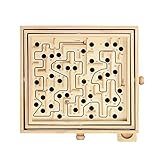
This is a great toy for kids in the early elementary age group because it builds problem-solving skills, patience, hand control, and spatial thinking.
You tilt the board gently, guide the marble around obstacles, try not to drop it, and make your way through the full maze like a little explorer on a mission.
It is fun, a bit competitive, and something kids and adults can enjoy together.
The wooden look makes it feel warm and nostalgic, and it’s the kind of toy you leave out on a table because everybody wants to take “just one turn.”
Why kids enjoy it
It feels like a real challenge — not too hard, not too easy — and kids get so proud when they master a section. They love watching the marble roll exactly where they want it to go, and it gives them a sense of control.
It also gives them a chance to compete against themselves, trying to beat their last attempt or improve their time. For children who like puzzles or mazes, this instantly becomes a favorite.
Why parents love it
It teaches focus without screens, keeps kids calm, and strengthens fine motor skills by making them tilt, balance, and plan each move.
It also encourages critical thinking because kids must figure out which path makes the most sense. It is quiet, durable, and does not require batteries — which is always a little bonus.
Plus, it’s something that can stay in the family for years because it is solid wood and made to last.
Pros
1. Builds excellent fine motor skills
Children learn to control small wrist and finger movements as they tilt the board. This strengthens the muscles in their hands and fingers, which later helps with writing, drawing, tying shoes, and using classroom tools. The maze layout forces them to use slow, careful movements, which makes their motor control more precise.
2. Supports strong problem-solving skills
Kids must think ahead, plan their route, and decide when to move fast or when to slow down. The 60 waypoints make the maze feel like a full puzzle, and children start picking up strategies — avoiding tricky corners, choosing smoother paths, or memorizing safe spots. This makes it great for developing critical thinking in a fun, hands-on way.
3. Encourages patience and focus
In a world full of fast, flashing toys, this maze slows them down. Kids become more patient as they learn to guide the marble carefully. They stay focused longer because the challenge keeps them engaged. It’s a great quiet-time activity for early learners who need help with sitting still and completing tasks.
4. Works for kids and adults together
This is one of those rare toys that older kids, grown-ups, and siblings can enjoy equally. Adults often try it once and get hooked. Playing together encourages social interaction, friendly competition, and teamwork when kids take turns coaching each other through tricky parts.
5. No batteries, screens, or setup
Parents love that this toy never needs to be charged. It is always ready, easy to carry, and perfect for travel, quiet afternoons, or even classroom break corners. It also helps kids enjoy real-world play instead of screens.
Cons
1. Can be challenging for younger children
Kids at the younger end of the 5–8 range may get frustrated if they move too fast and lose the marble often. However, the upside is the challenge teaches resilience. With a little practice, younger kids improve quickly.
2. Requires a flat, stable surface
To play smoothly, children need a table, desk, or flat floor. If the toy is used on a soft couch, blanket, or angled surface, the marble will not roll correctly. This is easy to fix, but something to keep in mind.
3. Small marble pieces need supervision
The marbles are small, so adults should keep an eye on very young siblings. As long as kids are six or older, they handle it well, but the pieces should be stored safely.
4. Some kids may want variety after mastering it
Once a child becomes very skilled, they might finish the maze too quickly. But for most kids, the challenge stays exciting for a long time because they always want to beat their own time or try new paths.
Why this toy fits beautifully into your full gift guide
It adds something totally different that the rest of your toys do not:
- A calm, focusing, brain-boosting challenge
- A classic wooden toy aesthetic
- A skill-building activity with no mess
- A game that both younger and older kids enjoy
- A great choice for children who need help with coordination, patience, and steady hand control.
It balances out the sensory toys, art sets, dough kits, and STEM kits you already included. Kids love variety, and this one fills the “quiet challenge” category perfectly. It makes your full list feel more complete, offering something for every personality — the creative child, the imaginative child, the sensory seeker, and now the puzzle thinker.

9. Board Games for Family Fun
Board games with a clean game board and simple rules help children slow down, think, and laugh with others. They teach turn taking and patience which are important social skills.

Why kids enjoy this toy
Kids feel included when they play board games with older kids and grownups. It is a chance for the whole family to sit together and interact.
Pros
1. Teaches patience
Waiting for turns helps children self-regulate.
2. Encourages problem solving
Strategy games help children think ahead and make choices.
3. Great for bonding
Families laugh together and build memories.
4. Helps with critical thinking
Kids learn how choices affect outcomes which teaches planning.
Cons
1. Children may argue about rules
Kids want to win and sometimes disagreements happen.
2. Some games include many pieces
Small pieces can get lost which may frustrate a child.
10. Graphic Novels, Storybooks, and Video Game Inspired Action Figures
Books and action figures give children a chance to enter a story. Graphic novels in particular help children who are still learning to read because the pictures guide them through.

Why kids enjoy this toy
Kids love characters they can connect with. They may pretend to be them, draw them, or create stories about them.
Pros
1. Encourages reading
Graphic novels build reading confidence because children follow along visually.
2. Builds vocabulary
Kids pick up new words naturally while reading fun stories.
3. Sparks creativity
Action figures encourage pretend play which builds imagination.
4. Perfect quiet time activity
Books help children calm down before bed or after school.
Cons
1. Some books may feel too advanced
Parents need to choose the right reading level so the child does not feel frustrated.
2. Action figures can get lost easily
Small toys often go missing which may lead to upset moments.
Choosing the right toys for kids ages 5 to 8 does not have to feel overwhelming. Children in this age group benefit most from toys that balance fun and learning. Toys that support fine motor skills, creativity, social interaction, sensory experiences, and stem skills provide the strongest foundation for their future.
These ten categories of toys help early learners explore, build confidence, and discover new interests. They also make fantastic gifts because they last longer than a few minutes of excitement. Many companies that sell these toys offer friendly customer service teams, free shipping, or gift cards for busy families who want quick shopping options.
If you are shopping for a birthday, a holiday, or just encouraging learning at home, these toys bring joy, confidence, and imagination to the early years. Each one opens the door to a world of play where children make learning fun without even realizing it.


I love how I used to play with some of these 45 years ago (such as the modeling dough). I guess some of the best toys never get out of fashion. The Montessori learning set is also one of my favorites.