

So, I just got back from Europe—Paris, Rome, London—the whole dreamy, long-haul-flights, “Did I forget my adapter again?” kind of adventure.
And let me tell you, traveling to a foreign country for the first time (or even the tenth) comes with its own set of surprises.
I learned a lot—some the easy way, some the hard way. So I put together this international travel checklist of the top 10 essential items and tips to make your trip smoother than a fresh passport stamp.
This is a casual, down-to-earth guide made just for you, especially if you’re a first-time traveler or planning a big trip soon. Plus, I’ve added a few product recommendations with affiliate links you’ll thank me for later.
This page contains affiliate links. If you choose to purchase after clicking a link, I may receive a commission at no extra cost to you. As an Amazon Associate, I earn from qualifying purchases at no cost to you. I take great pride in promoting tools and resources that I personally love, tried or diligently researched.
✈️ Travel Documents and Passport 
Before you even pack your bags, get your important documents in order. That means your passport, visa (if required), return date confirmation, and travel insurance papers. It can take months after you apply to get a passport. So, start months ahead.
Now here’s the key: make digital copies and physical copies of your passport and other essentials. Keep one in your checked bag, one in your hotel room safe, and send one to a trusted friend or family member back in your home country—just in case of an emergency.
I met a person on my trip whose wallet was stolen, so it’s good to keep a copy handy.
✅ Product to bring: A small travel document organizer. Great for passports, visas, boarding passes, and even credit cards.
👉 Check out this one on Amazon

💳 Credit Cards & Debit Cards (Don’t Bring Just One!)
Some places in foreign countries don’t take all cards—especially smaller restaurants, market stalls, or local shops. And while Visa is accepted almost everywhere, American Express or Discover? Not so much. That’s why it’s a good idea to carry at least two different types of credit cards. For example, one Visa and one American Express (or Mastercard). This gives you options if one gets declined or isn’t accepted.
Also, make sure you bring cards with no foreign transaction fees. Those little fees can sneak up on you fast and add up—especially on a long trip.
 📞 Call your bank before you travel to let them know your travel plans, so your card doesn’t get frozen for “suspicious activity” when you try to buy a croissant in Paris or a train ticket in Rome.
💳 Don’t bring just one card. Carry a backup and keep it in a safe place (separate from your main wallet) in case your primary card is lost, stolen, or flagged.
✅ Good idea: Consider a travel credit card like the Chase Sapphire Preferred or Bank of America Travel Rewards. These usually include trip cancellation protection, points or cashback, and even coverage for medical emergencies or lost luggage.
🛡 Bonus Tip: Bring an RFID-blocking wallet.

When you’re abroad, especially in crowded tourist spots or using public transport, it’s smart to protect your cards from digital pickpocketing. An RFID-blocking wallet helps keep your credit card info safe from scammers trying to scan your card data without you even knowing.
✅ Travel essential: Look for one that holds multiple cards, your passport, and zips shut—great for peace of mind and easy access.
🧳 Packing List Must-Haves (Don’t Forget These)
I know everyone says “pack light,” and that’s true. But there are essential items you do not want to forget:

- First aid kit (even just band-aids and pain relievers)
- Prescription medications (with your name on the label!)
- A reusable water bottle
- Packing cubes (game changer for staying organized!)
- Eye mask and travel pillow for long flights
- Small bag or daypack for public transport
✅ Travel tip: I love these compression packing cubes for keeping clothes neat and maximizing space.
👉 Try this set here

🧴 Tip: TSA allows meds in pill and liquid form, just keep them in a clear bag with original labels.
And here’s an important note: If you take prescription medications that are considered controlled substances—like certain pain meds, anti-anxiety meds, or ADHD treatments—some countries will require a doctor’s letter or documentation. Always check in advance! The last thing you want is to run into customs issues because of what’s in your pill bottle.
✅ Pillow for Travel (Neck Saver)

You need a solid neck pillow for long flights or train rides—especially if you’re trying to sleep in a window seat while a toddler kicks your seat.
Look for one that supports your neck, has memory foam, and packs down easily.
🛏 And let’s be honest: The pillows they give you on the airplane? Kinda wimpy. If you’re flying across the ocean or overnight, having something comfortable and supportive makes a huge difference in how rested you feel when you land.
✅ Compression Socks (for Better Circulation on Planes)
Long periods of sitting = stiff legs and swollen feet.
Compression socks help your blood circulate better, reduce the risk of clots (yes, it’s a thing on long-haul flights), and keep your legs feeling fresh.
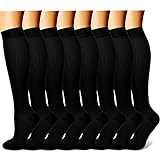
🧦 Helpful tip: Put them on before you board your flight. Way easier.
✅ Exchange Currency
This one caught me off guard: In some foreign countries, you’ll need local currency to use public restrooms—yes, even in train stations and malls. Some charge a small fee (like 50 cents), and they don’t always take cards.
Also, street vendors, small cafés, and public transportation machines may be cash-only.
💶 Good Idea: Exchange a small amount at your home country bank before you leave or use an ATM in your destination country for better rates (just avoid airport exchange counters—they usually have the worst rates).
✅ Travel Plug Adapter
Outlets are different in different countries, and your U.S. charger won’t fit those funky European sockets.
You’ll need a universal travel plug adapter that works in multiple countries (some even come with USB ports—bonus!).
🔌 Tip: Look for one that works in over 150 countries and has surge protection.
I purchased the EPICKA Universal Travel Adapter. Click here to read my full review or here to see the video.

✅ Vitamins & Vitamin C
I did remember to pack my daily vitamins—but totally forgot my Vitamin C. And wouldn’t you know it, I ended up catching a cold while I was there. I had to buy Vitamin C in Paris, which thankfully helped me feel better pretty quickly. But honestly, that was money wasted because I already had plenty of it sitting at home.
If I had started taking it right when I arrived, I might’ve avoided getting sick altogether. Lesson learned: don’t skip the Vitamin C!
Travel wears you out. New foods, different time zones, public transport, and long-haul flights can leave your immune system screaming for help.
Pack a small stash of your daily vitamins, especially Vitamin C to boost your immune system.
💊 Tip: Bring a pill organizer or ziplock bags with pre-packed daily doses—it saves space!

✅ Cold & Allergy Meds (Just in Case)
The last thing you want is to get hit with the sniffles or a headache in a host country where the labels are in a local language.
Bring a mini first aid kit with:
- Cold meds
- Pain relievers (ibuprofen or acetaminophen)
- Allergy meds (even if you think you won’t need them)
- Cough drops (lifesavers on dry planes!)
🧴 Tip: TSA allows meds in pill and liquid form, just keep them in a clear bag with original labels.
✅ Heating Pad (for the hotel or apartment)
After all the walking, luggage lugging, and sightseeing, a heating pad is a blessing for sore muscles or cramps.
Some compact ones are USB-powered or can roll up to fit in your bag.
🔥 Pro Tip: Check the voltage if you’re bringing an electric one from the U.S. (and pack that travel plug too!).
I personally use this one. It is long with 6 settings and automatic shut off. I’ve had the KOT heating pad for over a year and never had any issues with it. Not only does it sooth my muscles and back but the cloth material is very comfortable.

Phone Plan & Google Maps Access

Your regular U.S. phone plan might cost you a fortune overseas. Seriously international roaming charges can sneak up fast. Before you go, check if your carrier offers an international plan, or better yet, set up an eSIM for quick, affordable access to data in another country.
An eSIM lets you download a mobile plan without swapping out your physical SIM card. It’s the easiest way to stay connected, especially if you’re hopping between countries. You can usually get one through apps like Airalo, Holafly, or Nomad, which let you choose by region, country, or the amount of data you need.
BUT—make sure your phone is unlocked before you go. That was our mistake.
We were rushing, and in the middle of packing and prepping, we never checked if our phones were locked to our carrier. Turns out… they were. So we couldn’t use the eSIM we bought ahead of time. That left us depending on expensive roaming data.
Thankfully, a family member had a plan that covered international trips, so we relied on her hotspot for most of the time. But honestly? That’s not ideal—especially if your family is splitting up to do different things.
Don’t be like us—check ahead of time. You can usually find out if your phone is unlocked by calling your provider or checking your settings.
✅ Best option:
- Download Google Maps and Google Translate for offline use in your destination country
- Use a travel eSIM to save money and avoid relying on someone else’s data
- And again—check your phone status before you leave the United States!
Smart Traveler Enrollment Program (Free and Worth It)
If you’re a U.S. citizen heading out on an international trip, do yourself a favor and sign up for the Smart Traveler Enrollment Program (STEP). It’s a free service provided by the U.S. Department of State that helps keep you safe and informed while you’re in a foreign country.
Here’s why it matters:
If there’s a natural disaster, political unrest, disease outbreak, or any kind of suspicious activity while you’re abroad, your nearest U.S. embassy or consulate can contact you directly and give you important instructions or safety updates. Plus, they’ll be able to assist you faster if you have a medical emergency, lose your passport, or need to leave your host country quickly.
📌 Bonus benefit: Your family back home can also reach out through the embassy if there’s an emergency and they can’t contact you.
✅ Here’s how to sign up:
- Go to the official STEP website: https://step.state.gov
- Click “Create an Account” (you’ll need an email address and a password).
- Fill in your personal details, including your contact info and emergency contact.
- Add your trip details:
- Destination country
- Dates of travel
- Hotel or place you’re staying
- Any additional travel companions (optional)
- Once enrolled, you’ll receive real-time travel advisories, weather alerts, and safety information related to your trip.
It only takes about 5–10 minutes, and it’s worth it for the peace of mind alone.
✅ It’s free. Sign up here: https://step.state.gov

Weather Forecast and Time of Year Research
Don’t assume it’s sunny and 75. Europe was having a chilly spring when I packed sandals (rookie move). Check the weather forecast, holidays, and local events that may affect prices or crowds.
Also, study the country’s history and culture—respecting the local culture goes a long way.
✅ Fun tip: Use Weather Underground or AccuWeather for 10-day forecasts by region.
Bring Extra Luggage

If you’re planning to shop—or even might shop—during your international trip, go ahead and bring an extra piece of luggage or at least pack a foldable duffel bag in your suitcase.
Here’s why:
Shopping abroad is a whole experience. Whether you’re wandering through European street markets, hitting up boutiques, or finding those perfect one-of-a-kind gifts for family members back home, the stuff adds up. Fast.
By the end of your trip, you’re suddenly looking at:
- Souvenirs for friends and family
- Local snacks or treats
- Handcrafted items from local artisans
- Clothes (because yes, that Parisian scarf was calling your name)
- Maybe even a bottle of olive oil if the local customs allow it
And now you’re playing suitcase Tetris in your hotel room, trying to zip your bag shut while sitting on it. Not cute. Not fun.
✅ Smart solution:
Pack a lightweight, collapsible bag in your luggage or leave room in your checked bag. Some travelers even bring an empty carry-on just for the return flight. That way, you’re not stuck buying overpriced luggage at the airport or paying for overweight bags.
🎁 Extra bonus: You’ll have space to keep your purchases neat and safe—and avoid cramming delicate or breakable items.

Leave Info with Someone at Home
This is the last thing people remember to do, but it might be the most important. Leave your itinerary, hotel room info, emergency contacts, and return date with someone you trust.
Include your phone number, a copy of your passport, and your insurance provider contact—just in case of an emergency.
My Thoughts
An international trip can be the experience of a lifetime. But like anything else, preparation is key. From having the right travel credit card to understanding foreign travel rules, this list of things is your travel safety net.
So, If this is your first time abroad these essential travel items can help you focus on the joy of exploring a new destination—not scrambling for a toothbrush or dealing with lost luggage.
Bon voyage, my friend! ✈️🌍
This is an excellent list of tips and resources for traveling abroad! I haven’t been out of the country in many years and this will be my go-to when I do travel again! I love how you covered phone plans, insurance, electrical outlets, and safety measures with your passport. Very, very helpful! Thank you!